why PRP is transforming modern medicine
The World Beyond Aesthetics
If you’ve stepped into any aesthetic clinic in the last few years, you’ve undoubtedly heard of Platelet-Rich Plasma, or PRP. As a medical doctor specializing in aesthetic medicine, I’ve seen the remarkable shift in my patients’ skin and hair.
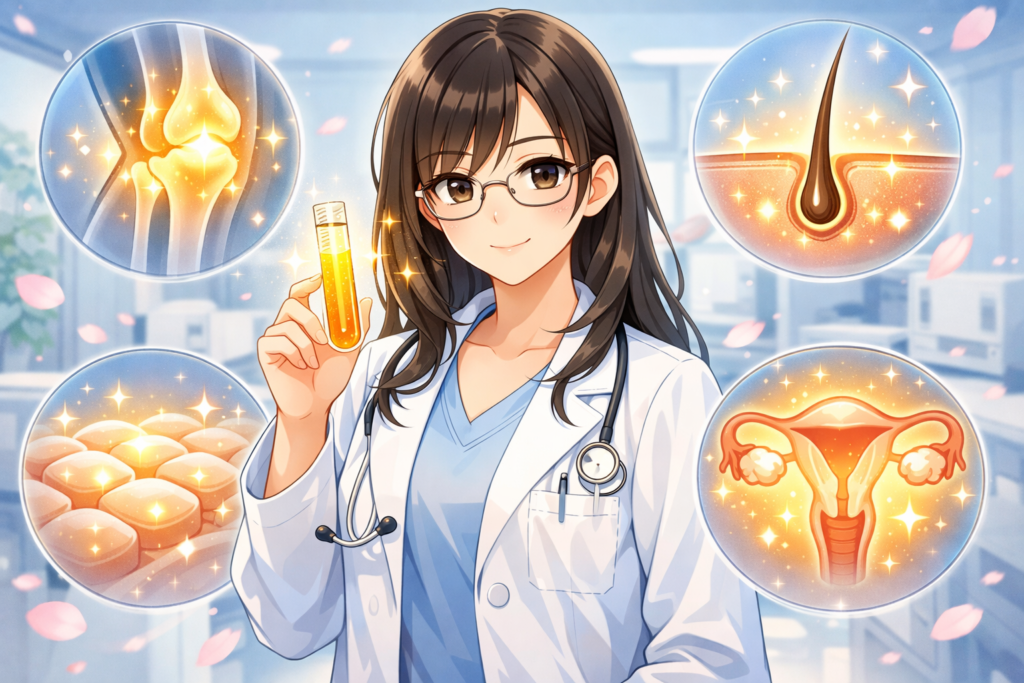
However, what I find truly fascinating is how this same “liquid gold” is quietly revolutionizing a multitude of medical fields. It’s a common misconception that PRP is only for facials and hair growth. In reality, it’s a powerful tool in regenerative medicine, harnessing the body’s own healing mechanisms to repair damaged tissue, reduce pain, and restore function.
The principle is beautifully simple: we draw a small amount of your blood, spin it in a centrifuge to concentrate the platelets, and then inject this growth factor-rich plasma back into the area that needs healing.
Those platelets act as a signal flare, calling in your body’s own repair cells. Let’s dive into the evidence behind this multi-specialty marvel.
Orthopedics and Sports medicine: what does PRP have to do with it?
This is perhaps the most robustly researched area for PRP outside of aesthetics. For millions suffering from the grinding pain of knee osteoarthritis (OA), PRP offers a viable alternative to steroids or invasive surgery. The evidence is compelling.
The Research: A systematic review and meta-analysis published in 2026 looking at 26 trials and 1,650 knees found that PRP provided significantly better pain relief and functional improvement compared to hyaluronic acid (HA) injections at both 6 and 12 months.
The Takeaway: Another 2026 meta-analysis focusing on primary and post-traumatic OA concluded that intra-articular PRP injections are effective for improving overall function, especially in patients under 60 years old.
Why it Matters: Unlike a corticosteroid which simply masks pain, PRP aims to modulate inflammation and potentially slow the degenerative process, offering patients a longer-term, regenerative solution.
Gynecology & Reproductive Health: A New Hope for Fertility
This is a frontier of PRP research that holds immense promise. In the world of reproductive medicine, PRP is being explored as a way to “wake up” dormant tissues and improve the uterine environment for pregnancy.
Ovarian Rejuvenation: For women with diminished ovarian reserve or premature ovarian insufficiency, intra-ovarian infusion of PRP is being studied as a way to reactivate follicular growth. A 2024 review in Frontiers in Endocrinology highlights its potential for promoting follicle development and improving ovarian reserve parameters, including increased levels of Anti-Müllerian Hormone (AMH) and antral follicle counts.
Endometrial Health: For women with thin endometrial linings (a common cause of failed IVF cycles), PRP shows considerable potential for promoting endometrial hypertrophy, essentially “plumping up” the lining to be more receptive to an embryo